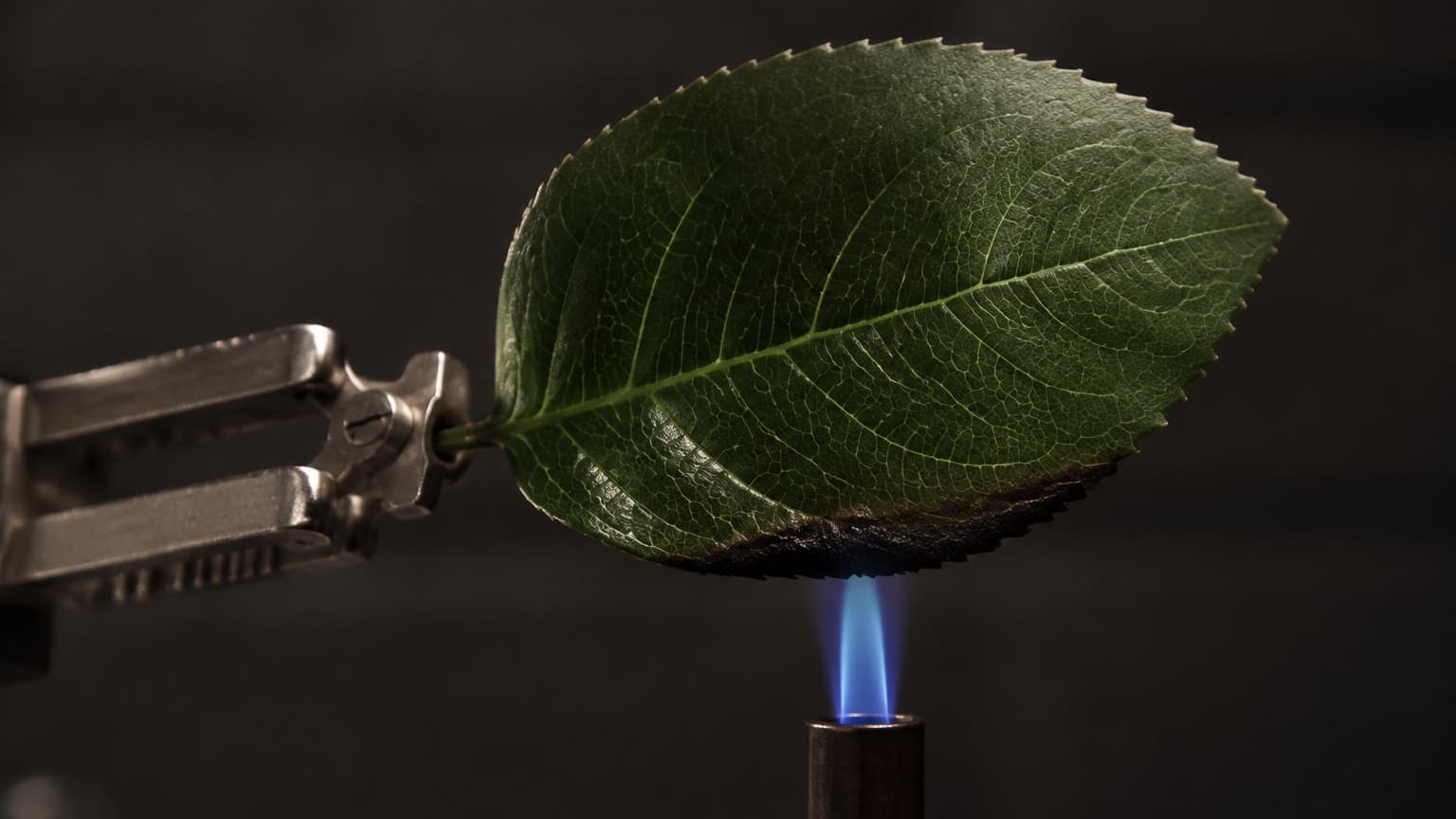
Artificial greenery is one of the last finishes to go into a commercial interior and one of the first things an inspector notices. It is combustible by default, it is often installed at height or across an egress route, and unlike a carpet or a wall panel it rarely arrives with a test certificate stapled to the pallet. This guide covers what gets checked, where specifications usually go wrong, and how to close the gap.
What the inspector is actually looking at
The question is never "is this plant fire-rated?" It is "can you show me the test report for this material, and does the material in front of me match it?" Three things follow from that.
- The rating belongs to the material, not the product. UL 94 classifies a polymer sample of a given thickness. A leaf, a stem and a trunk wrap can be three different materials with three different results. Ask for the rating per component.
- Thin sections are tested differently. Foliage is thin film, so the relevant classification is VTM (very thin material). A VTM-0 result means the sample self-extinguished within the limits of the test with no flaming drips. Thicker moulded parts, like stems and trunk sections, fall under the standard vertical burn test, where V-2 is the usual floor for commercial interiors.
- Traceability closes the loop. A report proves a material was tested. It does not prove the piece on site is that material. Lot marking on the product itself is what lets an inspector connect the two.
Topical treatment is not a rating
Most artificial planting on the market reaches a fire rating by spraying a retardant onto finished foliage. It works on the day of the test. It does not survive the building.
- Cleaning, humidity and UV all degrade the coating. Twelve months in, the plant is the same untreated polymer it was before the spray.
- The coating leaves a film. Dust adheres to it, colour shifts, and the plant looks tired long before it is replaced.
- Re-application is a maintenance line item that nobody budgets for, so it does not happen.
Inherent fire retardancy solves this at the polymer level. The retardant is compounded into the LDPE before extrusion or moulding, so it cannot wash off, wipe away, or expire. The leaf you install in year one has the same properties in year ten. That is the distinction to write into the specification: inherently fire retardant (IFR), compounded, not topically treated.
How to write the clause
A specification that leaves room for a treated substitute will get a treated substitute. The clause needs four parts.
| Part | What to write | Why it matters |
|---|---|---|
| Material | Inherently fire-retardant LDPE, compounded at polymer level. Topical coatings not accepted. | Rules out sprayed product at the submittal stage. |
| Classification | Foliage: UL 94 VTM-0. Moulded components: UL 94 V-2 minimum. | Matches the test to the section thickness. |
| Evidence | Third-party test reports from an accredited laboratory, per component, submitted before order. | An in-house certificate is a claim, not evidence. |
| Traceability | Permanent lot identification on each piece, cross-referenced to the test reports. | Lets the inspector match product to paperwork. |
Add UV stability where the installation sees daylight. Atriums, lobbies with curtain walls and exterior terraces will fade an unstabilised product in a season. ISO 105-A02 is the grey-scale reference for colour change under light exposure.
Specimens that meet the clause above
Every product in the Inherent Green range is available with a Fire Retardant + UV Resistant option, tested independently by SGS and laser-marked with its lot. These three cover the common interior applications: a specimen tree for lobbies, a bamboo for screening, and a Monstera for planters.
Submittal checklist
Before the order is placed, the submittal package should contain:
- Test reports per component (foliage, stem, trunk, planter liner where supplied), each from an accredited lab and less than three years old.
- A statement that the retardant is compounded, not applied, signed by the manufacturer.
- The lot-marking method and where on the piece it appears.
- UV classification for any product within sight of glazing.
- Product IDs for every SKU, so a substitution is visible as a change.
None of this is exotic. It is the same discipline applied to every other finish in the building. Artificial greenery has escaped it for years because it was treated as decoration. Fire marshals no longer see it that way, and the specification should not either.
Need the reports for a specific SKU, or a clause reviewed before it goes out? Use the button below. A specifier will reply with the documents, not a brochure.